

If you are reading this, chances are you have spotted a few hints that your little one might be ready to wave goodbye to diapers, and you want to do this the kind way, without tears or power struggles. Take a deep breath, mama. Potty training is one of those parenting milestones that feels enormous when you are standing at the bottom of it, but I promise you will both get there, probably with more giggles and fewer disasters than you are imagining right now.
This is a gentle, no-pressure roadmap. There is no single right age and no gold star for finishing first. Some kids master it in a long weekend, others take a relaxed couple of months, and both are completely normal. Below you will find the readiness signs to watch for, a calm overview of the popular 3-day method, the gear that actually helps, reward chart ideas, and honest advice for accidents and night training. Use what fits your child and quietly ignore the rest.

How to know your child is ready for potty training
The biggest mistake families make is starting based on the calendar instead of the child. Readiness is about development, not your neighbor’s timeline. Most children show signs somewhere between 18 months and 3 years, and pushing before those signs appear usually just stretches the whole process out and frustrates everyone.
Look for a cluster of these cues rather than just one:
- Staying dry for two hours or more, or waking up dry from naps.
- Noticing and telling you when their diaper is wet or dirty, or hiding to poop.
- Showing interest in the bathroom, the toilet, or watching you and siblings go.
- Being able to follow simple two-step instructions like “go grab your shoes.”
- Pulling pants up and down with a little help, and walking steadily.
- Disliking the feeling of a soiled diaper and wanting it changed quickly.
You do not need every single one, but three or four together is a green light. Equally important is your own readiness. Choose a stretch with no big moves, new siblings, travel, or illness on the horizon. A calm parent makes for a calmer process, and your mood genuinely sets the tone.
The 3-day method, gently explained
The “3-day method” is popular because it is focused and fast, but the gentle version skips the pressure. The idea is simple: you clear your calendar for a long weekend, go bare-bottomed at home, and give your child lots of chances to feel what their body is doing without a diaper catching everything.
Here is the relaxed overview:
- Day one: No diapers or underwear at home. Offer extra fluids and snacks, then invite your child to the potty every 20 to 30 minutes. Stay close, stay cheerful, and expect puddles.
- Day two: Stretch the time between potty visits and start watching for their own “pee dance” signals. Add loose, easy-to-pull-down pants with no underwear underneath for short practice runs.
- Day three: Introduce underwear and try a short, low-stakes outing, like a walk around the block with a potty break right before you leave.
If three days come and go and your child is not there yet, that is information, not failure. Pop the diapers back on, wait a few weeks, and try again. A gentle pause is far better than a battle that makes the potty feel scary.
The gear you actually need
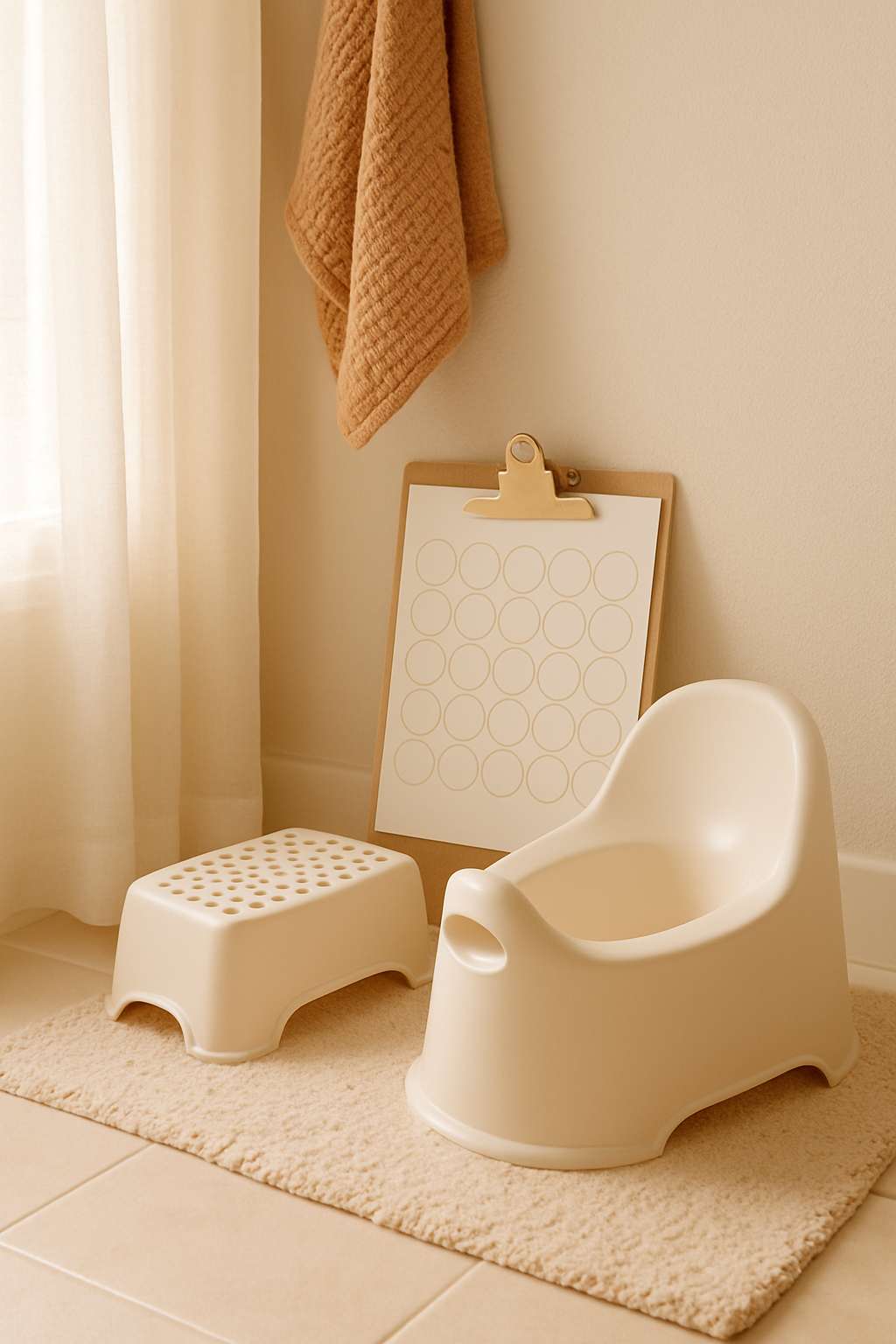
You can spend a fortune here, but the essentials are short and sweet. A small floor potty feels safer to many toddlers than a big toilet, while others prefer a cushioned seat reducer with a sturdy step stool so their feet are supported (which genuinely helps with pooping). Let your child help pick theirs, since a sense of ownership goes a long way.
Beyond the potty itself, stock up on a stack of cotton training underwear, a few waterproof mattress protectors, and plenty of easy pull-on bottoms. Keep cleanup supplies and a change of clothes in a basket by the door for outings. Skip the all-singing gadgets; your patience and a positive attitude are the real magic tools.
Reward charts and gentle motivation
A reward chart turns an abstract goal into something a toddler can see and celebrate. The trick is to keep it visual, simple, and free of shame. You can sketch a free reward chart in five minutes: draw a grid of squares, label it with a fun theme your child loves (rockets, butterflies, dinosaurs), and let them add a sticker or color a square after each potty success. Small, immediate wins beat big distant prizes every time.
Keep these motivation ideas in your back pocket:
- Praise the effort, not just the result. Sitting and trying deserves a cheer too.
- Use tiny rewards: a sticker, a high five, a happy potty dance, an extra story.
- Make handwashing a fun ritual with foamy soap so the whole routine feels good.
- Phase out stickers gradually once it clicks, so the toilet becomes the new normal.
Make new habits stick with a simple daily rhythm
Potty training lands so much easier when it sits inside a predictable day. Anchor potty breaks to meals, naps, and bedtime using our kids daily routine checklist, and turn the steps into something your toddler can follow on their own with these printable daily routine cards.
Handling accidents without the drama
Accidents are not setbacks; they are part of the curriculum. Your child is learning to read brand-new body signals, and that takes repetition. The single most helpful thing you can do is keep your reaction calm and neutral. A breezy “Oops, pee goes in the potty, let’s get cleaned up” teaches the lesson without attaching fear or embarrassment to it.
Never punish, scold, or compare your child to a sibling or friend who trained faster. Shame slows progress down because a stressed toddler will hold it in or avoid the potty altogether. Instead, build in regular potty reminders before transitions: before leaving the house, before naps, after meals. If you notice a sudden wave of accidents after things were going well, look for a cause like a cold, constipation, a schedule disruption, or a stressful change, then ease off the pressure for a bit.
Night training comes later (and that is fine)
Here is the relief you have been waiting for: daytime and nighttime dryness are two separate skills, and night training is largely out of your control. Staying dry overnight depends on a hormone that tells the body to make less urine while sleeping, and that hormone matures on its own schedule, sometimes years after daytime success.
So do not rush it. Keep using nighttime diapers or pull-ups without guilt until your child is consistently waking up dry for a week or two. When you do make the switch, layer the bed with a waterproof protector under a fitted sheet, limit drinks in the hour before bed, and build in one last potty trip at bedtime. Wet beds will still happen, so keep a spare sheet set within easy reach and handle it matter-of-factly in the dark.

Common potty training mistakes to skip
Most stumbles come from going too fast or caring too much about what other people think. Steer clear of these gentle traps:
- Starting too early. Chasing a number on the calendar instead of readiness signs almost always backfires.
- Asking “Do you need to go?” Toddlers almost always say no. Offer a friendly “Let’s try” instead.
- Showing frustration over accidents. Your stress becomes their stress, and progress stalls.
- Restarting and stopping repeatedly. Mixed signals confuse kids. If you pause, pause fully, then commit when you return.
- Comparing your child to others. Every child has their own timeline, and that is genuinely okay.
Frequently asked questions
At what age should I start potty training?
There is no magic number. Most children show readiness between 18 months and 3 years, but the signs matter far more than the age. Watch for staying dry longer, interest in the toilet, and the ability to follow simple instructions, then start when several of those line up rather than on a set birthday.
How long does potty training take?
It varies enormously. Some children grasp daytime dryness in a focused few days, while others need several relaxed weeks or months. Night training often comes much later and separately. Consistency and a calm attitude usually shorten the journey more than any specific method.
My child was doing great, then started having accidents again. Why?
Regression is common and almost always temporary. Look for triggers like illness, constipation, a new sibling, travel, or any big change. Respond with extra patience and gentle reminders rather than pressure, and things typically settle back down within a week or two.
Should I use pull-ups or underwear?
Many families find that real cotton underwear during the day helps kids actually feel wetness and learn faster, since pull-ups can feel too much like diapers. Reserve pull-ups for naps, nighttime, and long outings where an accident would be tricky to manage.
However your potty training journey unfolds, remember that you are not behind, your child is not behind, and a few puddles on the floor are simply proof that learning is happening. Stay patient, keep it light, and celebrate every small win. You have got this, and so does your little one.