

Bringing your newborn home is thrilling—but the quest for safe, restful sleep can feel overwhelming. Bassinet sleepers offer a cozy middle ground between cribs and bed-sharing, keeping your baby close while adhering to safety guidelines. This guide breaks down everything U.S. parents need to know, from AAP recommendations to top-rated products, so you can confidently make informed choices.
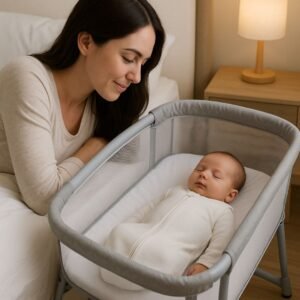
What Is a Bassinet Sleeper?
A bassinet sleeper is a compact, portable bed for infants (typically 0–6 months). Unlike traditional cribs, bassinets prioritize proximity and portability. Key types include:
- Bedside Sleepers: Attach securely to adult beds (e.g., Halo BassiNest).
- Portable Bassinets: Lightweight, foldable designs for travel (e.g., Graco Sense2Snooze).
- Smart Sleepers: Automated rocking/white noise (e.g., SNOO Smart Sleeper).
Safety Note: All bassinet sleepers must meet CPSC safety standards for breathability, stability, and firm mattresses.
If you’re exploring bassinet options, you’ll also want to understand what your baby wears to bed. Learn more in our guide to wearable sleepers.
AAP Guidelines for Bassinet Use
The American Academy of Pediatrics (AAP) emphasizes:
- Room-Sharing: Keep the baby in your room (not your bed) for at least 6 months to reduce SIDS risk.
- Safe Sleep Surface: Use a firm mattress with a fitted sheet—no pillows, blankets, or stuffed animals.
- Back to Sleep: Always place babies on their backs.
- Weight/Height Limits: Most bassinets accommodate babies up to 15–20 lbs or until they can roll over (~4–6 months).
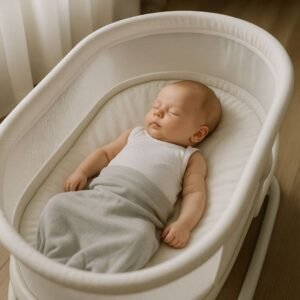
Types of Bassinet Sleepers
1. Bedside Sleepers
- Pros: It attaches to adult beds for easy nighttime feeding and promotes bonding.
- Cons: Limited longevity; may require bed height adjustments.
- Top Pick: Halo BassiNest 3.0S ($299) – Swivels 360° for easy access.
2. Smart/Automated Bassinets
- Pros: Soothes babies with motion/sound; reduces parental intervention.
- Cons: Expensive; shorter use window.
- Top Pick: SNOO Smart Sleeper ($1,695) – FDA-approved responsive rocking.
3. Portable Bassinets
- Pros: Lightweight; ideal for travel or small spaces.
- Cons: Fewer features; less durability.
- Top Pick: Graco Sense2Snooze ($399) – Foldable with vibration settings.
4. Multi-Functional Bassinets
- Pros: Doubles as a changing station or playard.
- Cons: Bulky; higher cost.
Top Pick: Baby Delight Beside Me ($159) – Converts to a bedside sleeper.
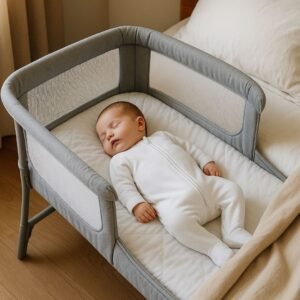
Bassinet Sleeper vs. Crib: Pros and Cons
| Feature | Bassinet Sleeper | Crib |
| Portability | ✅ Portable & space-saving | ❌ Bulky; less portable |
| Use Duration | ❌ Short lifespan (~6 months) | ✅ Long-term use (up to 3 years) |
| Proximity | ✅ Promotes room-sharing | ✅ Suitable but separate |
| Durability | ❌ Lower durability | ✅ More durable |
Struggling with sleep routines beyond the bassinet? Discover how music can support baby sleep right here.
Safety Checklist
- Breathable Sides: Mesh panels prevent suffocation (avoid padded bassinets).
- Sturdy Base: Wide legs or anti-tip design.
- Height Adjustability: Aligns with adult bed height for safe transfers.
⚠️ Red Flag: 37% of bassinet-related deaths involve soft bedding or prone positioning [PMC Study].
Top-Rated Bassinet Sleepers in 2025
1. Halo BassiNest 3.0S
- Price: $299
- Features: 360° swivel, mesh sides, bedside attachment.
- Mom Review: “Lifesaver for C-section recovery—no bending required!” (Reddit).
2. SNOO Smart Sleeper
- Price: $1,695 (rentals available)
- Features: Responsive rocking, weaning mode.
- Mom Review: “Worth every penny for colicky babies!” (WhatToExpect).
3. Graco Sense2Snooze
- Price: $179
- Features: Portable, three motion settings.
- Mom Review: “Perfect for grandma’s house trips.” (BabyCenter).
Real Parent Insights
- Reddit: “The Baby Delight Beside Me let me breastfeed half-asleep—no lifting!”
Amazon: “Fisher-Price Soothing Motions’ mobile kept my baby entertained for hours.”
Friendly Buying Guide
| Family Type | Recommended Bassinet |
| Tech-Lovers | SNOO Smart Sleeper |
| Budget-Conscious | Graco Sense2Snooze |
| Small Spaces | Baby Delight Beside Me |
Key Differences Between a Bedside Sleeper and a Traditional Bassinet
| Feature | Bedside Sleeper | Traditional Bassinet |
| Best For | Nighttime breastfeeding; postpartum recovery | Daytime naps; small living spaces |
| Portability | Limited due to attachment | Highly portable; easy room-to-room movement |
| Space Design | Requires bedside setup | Freestanding; fits anywhere |
| Access | Drop-down side for easy access | Full enclosure; access from above |
| Price | More expensive (~$299) | Varies ($50–$150) |
Final Takeaways
Bassinet sleepers offer a safe, convenient solution for newborns, but always prioritize AAP guidelines: back sleeping, firm mattress, and clutter-free space. Whether you opt for a high-tech SNOO or a budget-friendly Graco, the right bassinet can make those sleepless nights a little easier for you and your baby.
Sources:
- American Academy of Pediatrics (AAP) Safe Sleep Guidelines
- NIH/PMC Study on Bassinet Safety (2008)
- Baby Gear Lab 2025 Bassinet Reviews
- Parent testimonials from Reddit, BabyCenter, and Amazon
Always consult your pediatrician before choosing sleep gear for your baby.
Now I am going away to do my breakfast, later than having my breakfast
coming over again to read more news.
The website design looks great—clean, user-friendly, and visually appealing! It definitely has the potential to attract more visitors. Maybe adding even more engaging content (like interactive posts, videos, or expert insights) could take it to the next level. Keep up the good work!
Good post. I am facing many of these issues as well..
Thanks for finally talking about > The Ultimate Guide to Bassinet Sleepers – momsjorney.space < Liked it!