
Disclosure: This page contains affiliate links. If you buy through them, Mom's Journey may earn a small commission, at no extra cost to you.
No one tells you how much emotional space baby sleep will quietly occupy.
Not just at night — but all day long.
I remember reheating the same cup of coffee three times while replaying the night in my head. How many times did the baby wake? Was she cold? Overtired? Did I miss something obvious?
At one point, I even cried from exhaustion, convinced I was already making first-time mom sleep mistakes without realizing it.
If you’re searching for what I wish I knew about baby sleep, let me gently start here:
You are not doing this wrong.
You are not behind.
And you are definitely not the only mom awake wondering if everyone else got instructions you somehow missed.
There are things many of us only learn in the quiet hours — the baby sleep tips for new moms that would have softened our anxiety if we had known them earlier.
So this is not a rulebook.
Just one mom sharing the things I wish someone had whispered to me sooner.
Insight 1 — Babies Aren’t Bad Sleepers
For a while, I secretly wondered if my baby was simply a “bad sleeper.”
She woke often. Needed closeness. Rarely drifted off independently.
Meanwhile, other parents seemed to talk about long stretches and peaceful nights.
But babies are not bad sleepers.
They are brand new humans adjusting to a brand new world.
Their sleep cycles are shorter.
Their nervous systems are still developing.
Their need for connection is biological — not behavioral.
Waking is not a failure.
And it is absolutely not your fault.
The night I stopped asking, “What am I doing wrong?” and started asking, “What might my baby need?” something inside me softened.
Understanding why babies wake changed everything for me.
Instead of spiraling, I became curious. Calmer. More responsive.
If your baby wakes often, please hear this:
Your baby is not broken.
You are not failing.
You are parenting.
And that alone means you are already doing something right.
Insight 2 — Overtired Doesn’t Mean Better Sleep
This one surprised me the most.
Like many new moms, I assumed keeping my baby awake longer would help her sleep harder.
It sounds logical — more tired equals deeper sleep.
I learned this the hard way.
When babies stay awake too long, their tiny bodies release stress hormones that actually make settling more difficult. Instead of melting into sleep, they often become wired.
You might recognize it:
The sudden burst of energy.
The frantic rubbing of eyes.
The cry that escalates quickly.
Ironically, protecting sleep often supports longer stretches far better than pushing past it.
Many parents searching for how to help their baby sleep through the night discover this turning point — that gentleness and timing matter more than exhaustion.
If bedtime has ever felt chaotic, it wasn’t because you missed something obvious.
You were learning your baby in real time.
And that is exactly how it’s meant to be.
Insight 3 — Temperature Matters More Than I Thought
I didn’t expect temperature to occupy so much mental space.
Yet there I was at 2 a.m., hovering over the crib:
Too warm?
Too cold?
Another layer?
Remove one?
Those tiny decisions felt enormous in the dark.
Once I understood how to dress my baby properly, nights became calmer.
Not perfect — but noticeably calmer.
During those early months, one thing that eased my uncertainty was using a swaddle designed to feel secure while still allowing comfort:
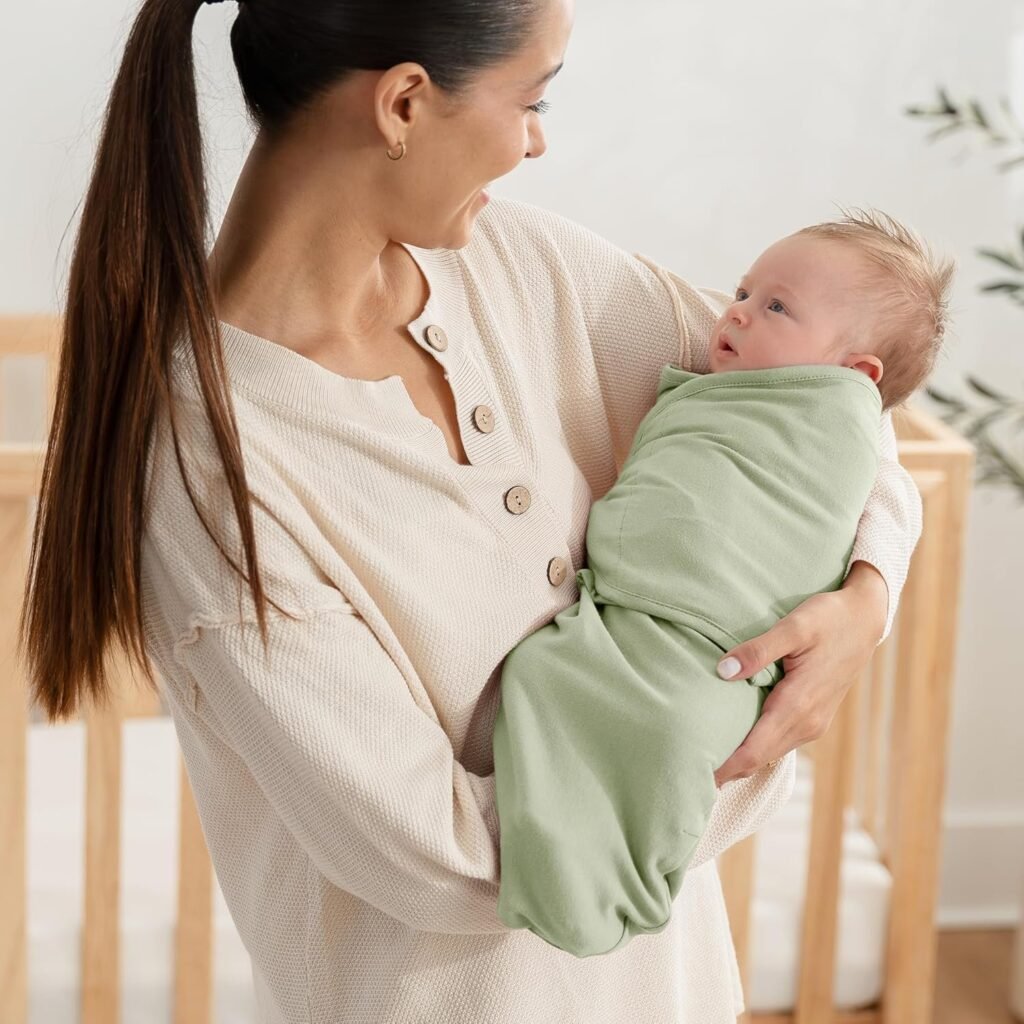
Pediatric guidance commonly suggests stopping traditional swaddling once a baby shows signs of rolling. Those first attempts can appear around 8–12 weeks, which is often a gentle signal to begin transitioning.
Having something appropriate for that stage brought a surprising sense of confidence.
And confidence is one of the most underrated newborn sleep tips.
Because when you feel calmer, you move calmer.
And babies feel that.
Insight 4 — Loose Blankets Made Me More Anxious Than Relaxed
Before becoming a mom, I imagined a cozy sleep space would help me relax.
Instead, I found myself constantly watching… adjusting… checking again.
My body never fully rested.
What I didn’t realize was that my sleep mattered too.
Simplifying the sleep space didn’t just support my baby — it supported my nervous system.
Switching simplified things more than I expected.
Sometimes baby sleep advice isn’t about adding more.
Sometimes it’s about removing what quietly keeps you on alert.
Parental calm is powerful.
And often overlooked.
Insight 5 — Sleep Environment Is Half the Battle
I used to think sleep was mostly about schedules.
But environment speaks softly to a baby’s brain.
Light.
Sound.
Familiar space.
Consistency.
None of it needs to be perfect — just predictable.
One of the biggest shifts for me was realizing I didn’t need to hover constantly to feel reassured.
Being able to hear my baby without standing over the crib created space for trust.
A simple audio baby monitor helped me find that balance:
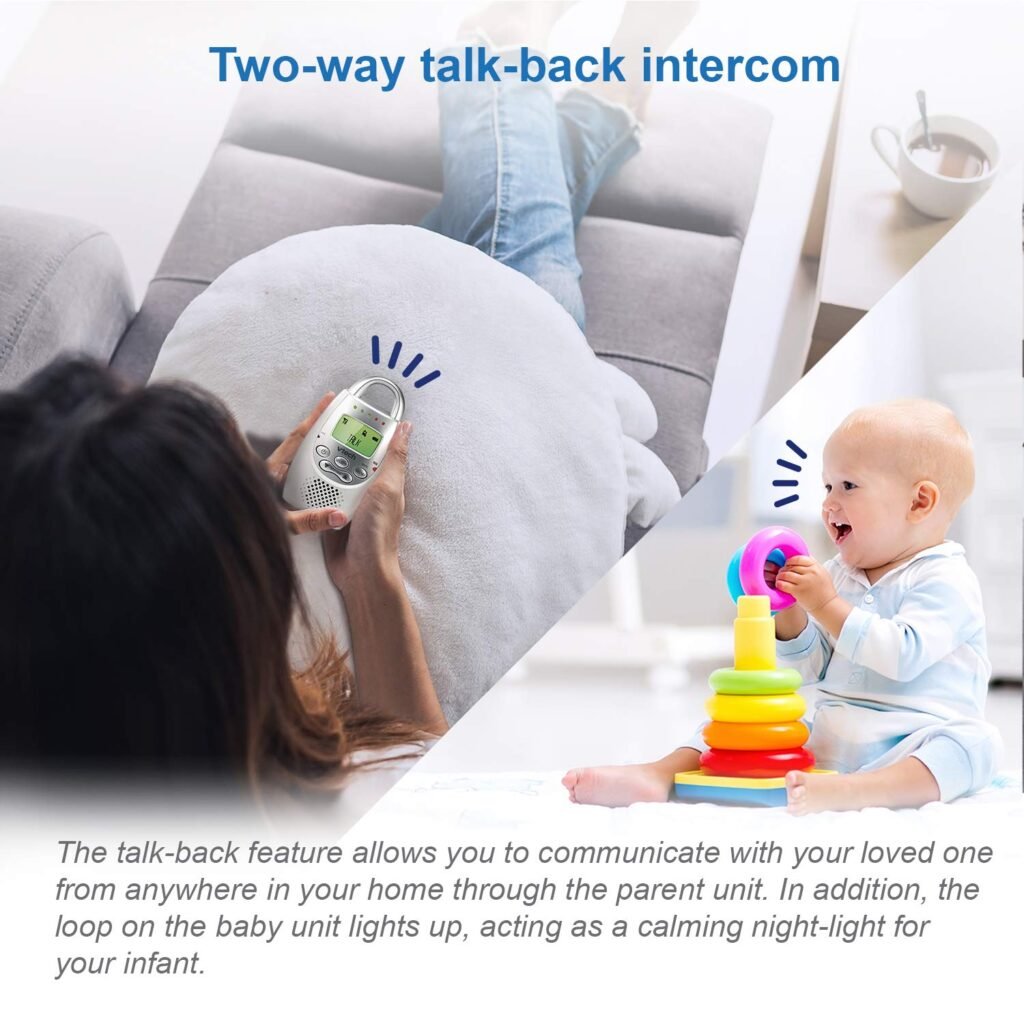
✔ Lower radiation
✔ Longer battery life
❗ You hear your baby, but you don’t see them.
And honestly — that can be okay.
For me, it reduced the urge to check every tiny sound and helped both of us rest more deeply.
Sometimes the goal isn’t a perfect nursery.
It’s a steady one.
Insight 6 — Tracking Sleep Saved My Sanity
Sleep deprivation blurs everything.
I couldn’t remember when the last nap started.
How long it lasted.
Or whether the night had truly been as chaotic as it felt.
It often seemed like my baby “never slept.”
Tracking changed that story.
Writing things down helped me see patterns I couldn’t recognize through exhaustion:
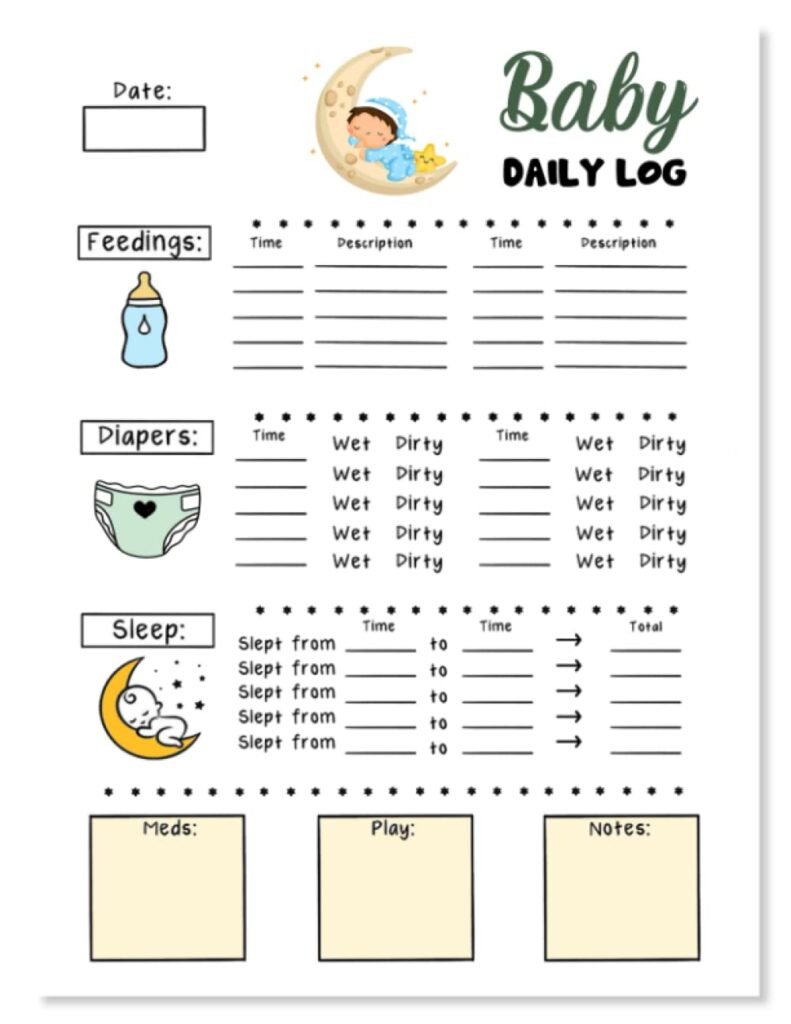
Instead of reacting emotionally, I could respond gently.
Instead of guessing, I could notice rhythms.
Control doesn’t have to mean rigidity.
Sometimes it simply means clarity.
Among all the things I didn’t know about newborn sleep, this may have protected my confidence the most.
Insight 7 — The Moment I Was Too Exhausted to Keep Guessing
There is a quiet threshold many parents reach.
Not dramatic. Just heavy.
You’ve read the articles.
Listened to advice.
Tried suggestions.
And still — you wonder if you’re missing something important.
Having structured guidance helped me stop second-guessing everything.
Not because I needed strict rules.
But because I needed someone to connect the dots when my tired brain couldn’t.
Understanding replaced spiraling.
And that is incredibly calming.
When Guessing Becomes Too Heavy
There was a night I remember vividly — the kind where morning feels impossibly far away.
I wasn’t just tired.
I was mentally tangled from trying to figure everything out alone.
There came a moment when continuing to guess felt heavier than asking for support.
Having structured guidance helped me finally understand my baby’s sleep patterns instead of questioning every decision:
Not urgency.
Not pressure.
Just clarity.
And clarity can feel like exhaling after holding your breath for weeks.
If This Is What You Wish You Knew About Baby Sleep, Let It Be This
You were never meant to figure this out overnight.
Baby sleep is not a test you pass or fail.
It is a relationship you learn — slowly, imperfectly, lovingly.
You will second-guess yourself sometimes. Every caring parent does.
But you are far more intuitive than you realize.
Start small.
Trust what you see.
Protect your rest where you can.
Let go of perfection.
Nights will not always feel this long.
And one day — without even noticing when it changed — you will realize you are no longer searching for answers at 2 a.m.
Until then, remember:
You are not alone.
You are learning.
And you are doing far better than you think.