
Disclosure: This page contains affiliate links. If you buy through them, Mom's Journey may earn a small commission, at no extra cost to you.
At 2:11 a.m., the house is silent — except for the soft sound coming from the monitor.
You hold your breath.
Maybe this time the baby will stay asleep.
Two minutes later… crying.
Again.
You glance at the clock and start doing quiet math in your head.
“If I fall asleep now, I might get 47 minutes.”
No one really prepares you for how much emotional space baby sleep will take. And if you’re here searching for how to get baby to sleep, chances are you’re not just curious — you’re exhausted.
Let me gently remind you of something before we go any further:
You are not doing this wrong.
Most parents trying to help their baby sleep through the night aren’t failing — they’re simply missing a few hidden patterns that quietly shape nighttime sleep.
Once you see them, everything begins to feel more manageable.
Let’s walk through them together.
Sleep Associations — Why Babies Naturally Depend on Them
If your baby needs rocking, feeding, bouncing, or being held to fall asleep, you didn’t create a problem.
You created comfort.
Sleep associations are simply patterns babies naturally rely on when drifting off. They are not manipulation. They are not “bad habits.” They are biology.
Babies repeat what feels safe.
Here’s the part many parents don’t realize: sleep is made of cycles. As adults, we shift between them without noticing. Babies often surface more fully — and when they do, they look for the same conditions that helped them fall asleep in the first place.
If those conditions are missing, they signal for help.
Not because you spoiled them.
Because consistency equals safety in a baby’s nervous system.
This is often the quiet reason baby sleep through the night feels so far away.
The goal is never to remove comfort. The goal is to gently expand what feels familiar so your baby can resettle with less assistance over time.
Think evolution — not elimination.
Small shifts matter.
And none of this means you’ve done anything wrong.
Overtiredness — The Mistake That Feels Logical
Almost every parent tries this at some point:
“Let’s keep the baby awake a little longer so they sleep harder.”
Ironically, the opposite often happens.
Overtired babies don’t melt into deep sleep — they frequently become wired.
When a baby stays awake past their natural window, the body releases stress hormones like cortisol. Instead of relaxing, the nervous system moves into an alert state.
You might recognize it instantly:
The sudden burst of energy.
The frantic rubbing of eyes.
The bedtime meltdown that seems to come from nowhere.
Counterintuitive for many parents, but protecting bedtime is one of the most powerful ways to support baby sleep through the night.
Earlier sleep can feel scary at first — especially if you worry the night will start too soon.
But rested babies tend to connect sleep cycles more smoothly than overtired ones.
And if you’ve ever stretched wake windows hoping for longer sleep…
You were making the most loving, logical decision you could with the information you had.
Now you know something new.
Sleep Environment That Supports Baby Sleep Through the Night
Sometimes the biggest shifts come from surprisingly small adjustments.
Babies are deeply responsive to their surroundings. Light, sound, and stimulation all send signals to the brain about whether it’s time to sleep or wake.
The goal is not perfection.
The goal is predictability.
Gentle Lighting
Bright lights can fully wake a baby’s brain — even when you’re trying to keep things calm.
Switching to a soft night light helped us keep nighttime interactions calm without fully waking the baby:

Soft lighting protects that fragile “sleepy” state and makes returning to sleep easier.
Darkness matters too — especially in the early morning hours when sleep pressure is lighter.
Darkening the room often helped signal that it was still time for sleep — even during early morning hours:

Sometimes early waking isn’t developmental at all.
Sometimes the room is simply saying, “Good morning.”
Sound and Predictability
Total silence isn’t necessary — in fact, steady background sound can prevent sudden noises from fully waking a baby.
More than anything, babies relax into environments that feel consistent night after night.
Not fancy.
Not perfect.
Predictable.
Gentle Routines That Signal Safety
If there is one thing babies love, it’s knowing what comes next.
Repetition lowers stress. Familiar steps help the nervous system slow down.
A routine does not need to be long or complicated. It simply needs to be recognizable.
Maybe it looks like:
Dim lights
Diaper change
Quiet feeding
A short song
One gentle cuddle
That’s enough.
Creating a simple, predictable bedtime routine became much easier once we could actually see the steps instead of trying to remember them while exhausted:
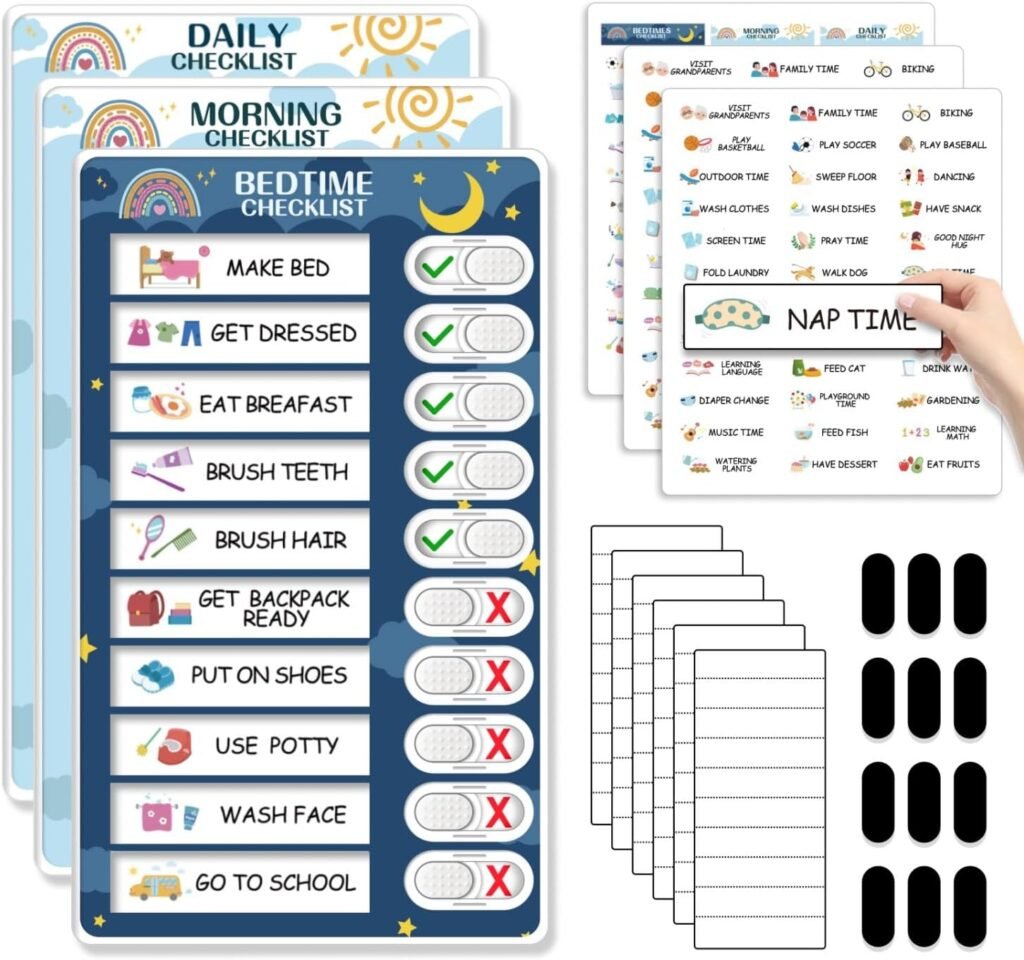

When your brain is foggy from broken sleep, removing decision-making is powerful.
Calmer parents create calmer bedtimes.
This is where gentle sleep training truly begins — not with rigid methods, but with repeated signals of safety.
Gentle sleep training is not about forcing independence.
It’s about supporting it gradually.
A slightly longer pause before picking up.
Lower stimulation.
Consistent cues.
Tiny changes that whisper, “You’re safe. Sleep is okay.”
The Turning Point Many Parents Quietly Reach
There is a moment many parents don’t talk about.
The moment when you realize you cannot keep guessing.
You’ve adjusted bedtime.
Tweaked wake windows.
Darkened the room.
Built a routine.
And still… you’re awake again at 1:38 a.m., staring at the ceiling.
Exhaustion changes how everything feels. Small challenges start to feel enormous.
Structured guidance can help exhausted parents understand what their baby truly needs — not just react to each wake-up in the dark.
Because often, it isn’t effort you’re missing.
It’s clarity.
And clarity is incredibly calming.
When Nothing Seems to Work
Some nights stretch so long they barely feel like night at all.
I remember watching the clock and feeling a quiet sense of dread as midnight turned into 2 a.m., then 4.
I wasn’t just tired.
I was depleted.
There came a point when I was too exhausted to keep guessing. Having structured guidance helped me finally understand my baby’s sleep patterns instead of reacting to them.
Not because I needed something extreme.
But because I needed someone to connect the dots I was too tired to see.
Understanding patterns changes everything.
Instead of asking, “Why is this happening again?”
You begin thinking, “Oh… this makes sense.”
And when something makes sense, it stops feeling impossible.
A Gentle Thought Before You Try to Sleep Again
If you are trying to help your baby sleep through the night, please hear this:
You are not behind.
You are not failing.
You are not missing some secret other parents know.
You are learning a brand-new language — your baby’s language — while functioning on far too little sleep.
Sleep associations are normal.
Overtiredness is common.
Environment matters.
Routines matter.
But perfection does not.
Start small.
Protect bedtime.
Soften the environment.
Repeat what feels safe.
Progress in baby sleep is rarely dramatic.
More often, it is quiet.
One slightly longer stretch.
One easier bedtime.
One night that feels gentler than the last.
And slowly — almost without noticing — things begin to change.
You are doing better than you think.
And tonight, even if sleep still comes in fragments…
You are not alone.
потім сео, мет