
Disclosure: This page contains affiliate links. If you buy through them, Mom's Journey may earn a small commission, at no extra cost to you.
As a new parent, navigating the world of baby sleep products can feel overwhelming. How do you choose the safest and most effective between swaddles, sleep sacks, and footed pajamas? This guide breaks down everything you need about wearable sleepers — the AAP-approved solution for reducing SIDS risk while keeping your baby comfortable through every stage.
What Are Wearable Sleepers?
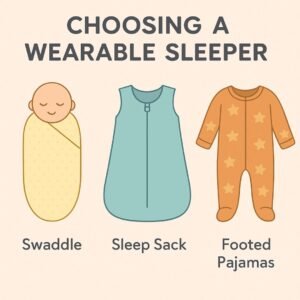
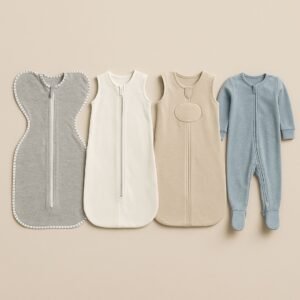
Wearable sleepers are safe, blanket-like garments that replace loose bedding in cribs. Unlike traditional blankets or footed pajamas, they zip or snap around the baby’s body, eliminating suffocation hazards while providing warmth. Key types include:
- Swaddles: These snugly wrapped babies mimic the womb for newborns (0–3 months).
- Sleep Sacks: Wearable blankets with armholes, ideal for babies transitioning out of swaddles.
- Weighted/Zen Sleepers: Lightly weighted options (e.g., Nested Bean) for older infants, though the AAP cautions against weighted products.
- Footed Sleepers: Integrated feet for mobile babies who need warmth without restriction.
Wondering how to dress your baby under different room temperatures? Our ultimate sleepwear guide breaks it down for you in this post.
Why Pediatricians Recommend Wearable Sleepers
The American Academy of Pediatrics (AAP) emphasizes a bare sleep environment to prevent SIDS, advising against loose blankets, pillows, or toys. Wearable sleepers align with these guidelines by:
- Eliminating suffocation risks from loose bedding.
- Keeping babies on their backs without restricting hip development.
- Regulating body temperature through breathable fabrics like cotton or bamboo.
Key AAP Updates (2022):
- Avoid weighted sleepwear due to overheating and breathing risks.
- Discontinue swaddling once babies show signs of rolling (around 8 weeks).
Benefits of Wearable Sleepers
And if you’re choosing between sleep sacks or swaddles, don’t miss our deep dive into why sleep sacks are so popular.
1. Reduces SIDS Risk
By replacing loose blankets, wearable sleepers lower suffocation risks—the leading cause of SIDS.
2. Temperature Regulation
TOG-rated fabrics (Thermal Overall Grade) help maintain a safe body temperature.
| TOG | Temperature | Outfit |
| 0.5 | 75°F+ (24°C+) | Diaper + short-sleeve onesie |
| 1.0 | 68–75°F (20–24°C) | Cotton pajamas + 1.0 TOG sleep sack |
| 2.5+ | Below 68°F (20°C) | Fleece sleeper + 2.5 TOG sack |
3. Sleep Routine Cues
Zipping a sleep sack signals bedtime, helping babies wind down faster. Parents on BabyCenter report faster sleep onset when using consistent sleepwear.
Types of Wearable Sleepers
Swaddles (0–3 Months)
- Purpose: Reduces startle reflex.
- Top Picks: Love to Dream Swaddle Up (arms-up positioning), Halo SleepSack Swaddle.
- Safety: Stop swaddling once the baby rolls.
Transition Sleep Sacks (3–6 Months)
- Purpose: Safe for rolling babies.
- Top Picks: Kyte Baby Sleep Bag (bamboo fabric), Woolino 4-Season Sack.
Weighted Sleepers (Caution Advised)
- Note: AAP discourages weighted products, but brands like Nested Bean offer lightly weighted options for older infants.
Footed Sleepers (6+ Months)
- Purpose: Freedom for crawling/walking.
- Top Picks: Burt’s Bees Baby Organic Sleepers, Carter’s Footed Pajamas.
Seasonal Dressing Tips
- Summer: Use 0.5 TOG sleep sacks (e.g., Kyte Baby) with breathable cotton onesies.
- Winter: Layer fleece sleepers under 2.5 TOG sacks for sub-68°F rooms.
- Always: Check the baby’s chest or neck—not hands—to assess comfort.
Top U.S. Brands Compared
| Brand | Best For | Key Feature | Price |
| Halo SleepSack | Newborns | Swaddle-to-sack transition | $30 |
| Kyte Baby | All seasons | Bamboo fabric (3° cooler than cotton) | $45 |
| Nested Bean | Older infants | Light chest weight (AAP-cautioned) | $40 |
| Love to Dream | Self-soothing | Arms-up design | $35 |
Real Parent Experiences
- Reddit: “Kyte’s 1.0 TOG sack saved us during sleep regressions!”
- WhatToExpect: “Halo’s Velcro swaddle was foolproof for my colicky newborn.”
- BabyCenter: “Switched to Woolino at 6 months—best investment ever.”
Safety Tips
- Avoid Overheating: Dress baby in 1 layer more than you’d wear.
- Size Properly: Ensure snug neck and armholes to prevent slipping.
- Transition Timely: Move to sleep sacks once baby rolls or outgrows swaddles.
Friendly Product Picks
- Halo SleepSack Swaddle: Ideal for newborns.
- Kyte Baby Sleep Bag: TOG-rated bamboo.
- Burt’s Bees Organic Footed Pajamas: Eco-friendly winter option.
Pinterest-Worthy Content Ideas
- “Safe Sleep Made Simple: Your Wearable Sleeper Cheat Sheet”
- “From Swaddle to Sack: How to Transition Without Tears”
- “Top 5 Wearable Sleepers for Every Season”
Wearable sleepers are a game-changer for new parents prioritizing safety and sleep quality. By choosing the right type for your baby’s age and climate, you can create a secure sleep environment that fosters restful nights—and peaceful mornings.
Sources:
- American Academy of Pediatrics (AAP) 2022 Guidelines
- Kyte Baby, Halo, and Woolino Product Guides
- Parent testimonials from BabyCenter and Reddit
Always consult your pediatrician before introducing new sleep products.