
Disclosure: This page contains affiliate links. If you buy through them, Mom's Journey may earn a small commission, at no extra cost to you.
If you’ve ever stood over your baby’s crib wondering if they’re warm enough — or too warm — you’re not alone. That’s exactly why sleep sacks have become a modern parenting must-have. Designed for safer sleep, better rest, and peace of mind, these wearable blankets are more than just cute; they’re a game-changer.
In this guide, we’ll walk you through everything you need to know — from how sleep sacks work to how to choose the best one for your baby’s age, the season, and your sleep goals. Whether you’re a brand-new parent or transitioning from swaddling, we’ve got you covered.
🌙 What are Sleep Sacks?
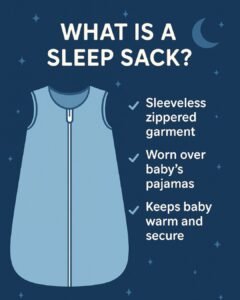
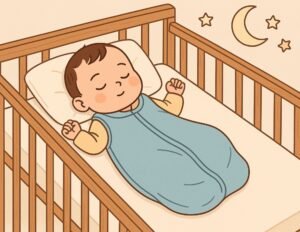
A sleep sack (also known as a wearable blanket) is a sleeveless zippered garment worn over your baby’s pajamas. It keeps your little one warm and secure — without the risks that come with loose blankets.
The design is intentionally simple: a snug fit around the shoulders, a roomy bottom to allow leg movement and a cozy feel that gently says, “It’s bedtime now.”
Unlike swaddles, which restrict movement and are used mostly for newborns, sleep sacks give babies the freedom to move their arms — making them safer once your baby starts to roll over.
Choosing a sleep sack is just the start—get the full picture with our wearable sleeper guide.
🛏️ Sleep Sack vs. Swaddle: What’s the Difference?
| Feature | Sleep Sack | Swaddle |
| Arm freedom | ✔️ Arms free |
❌ Arms tucked |
| Safe for rolling babies | ✔️ | ❌ |
| Age range | 3 months – 3 years | Newborn (0-3 months) |
| Movement | Allows movement | Restricts movement |
| Ease of use | Zippers | Folding technique |
The shift from swaddle to sleep sack usually happens around 3–4 months — a big milestone in your baby’s sleep journey.
✅ Key Benefits (Backed by Experts)
Sleep sacks aren’t just cozy — they’re built around safety and sleep science. Here’s why pediatricians and parents love them:
- Prevent overheating or suffocation: No loose blankets = safer sleep.
- Maintain ideal temperature all night long.
- Create strong sleep associations, Just like a favorite lullaby or bedtime story.
- Keep legs from getting stuck between crib slats.
- Deter little escape artists from climbing out of the crib too soon.
👉 The American Academy of Pediatrics recommends avoiding loose bedding for babies under 12 months — making sleep sacks a safer alternative.
👶 When to Start (and Stop) Using a Sleep Sack
When to Start:
- Baby is rolling over (typically around 3–4 months)
- You’re transitioning away from a swaddle.
- You want to give your baby more freedom to move.
👉 Some parents skip the swaddle entirely and start with a sleep sack from birth!
When to Stop:
- Your toddler starts unzipping or resisting the sleep sack.
- They can climb out of the crib while wearing it.
- They ask for a regular blanket.
- The sleep sack feels restrictive for an active sleeper.
Most parents use sleep sacks until 18–24 months. Some toddlers even prefer them up to age 3!
🌡️ What Is a TOG Rating (And Why It Matters)
TOG stands for Thermal Overall Grade — a simple measure of how warm a fabric is. Choosing the right TOG ensures your baby doesn’t overheat or get too cold.
| TOG Rating | Best For | Room Temperature |
| 0.5 – 1.0 | Summer | 75–80°F / 24–27°C |
| 1.0 – 2.0 | Spring/Fall | 68–74°F / 20–23°C |
| 2.5 – 3.5 | Winter | 61–67°F / 16–19°C |
👉 Always consider your baby’s pajamas and room temperature when choosing a TOG.
🧵 Which Fabric Should You Choose?
| Material | Why Parents Love It | Best For |
| Cotton | Durable and soft | Everyday use |
| Muslin | Breathable, softens with wash | Hot climates |
| Bamboo | Hypoallergenic, silky | Sensitive skin |
| Merino Wool | Temperature-regulating | All-season use |
Bamboo and merino wool are excellent for year-round comfort, especially for babies with eczema or sensitive skin.
🛒 Top Sleep Sack Brands: What Makes Them Special?
| Brand | Best Feature | Ideal For |
| Woolino | Merino wool, all-season | Parents wanting one product from 2–24 months |
| Halo | Swaddle-to-sack options | Newborns, hip-healthy sleep |
| Kyte Baby | Ultra-soft bamboo | Sensitive skin, eczema |
| Gunamüna | Easy zip changes | Nighttime diapering |
| ErgoBaby | Snaps, travel-friendly | Active toddlers |
| Tealbee | Footed sleep sacks | Toddlers on the move |
| Amazon HAPIU / Quince | Budget-friendly, durable | Everyday affordability |
❓ Frequently Asked Questions
Are sleep sacks really necessary?
They’re not required, but they’re one of the safest ways to keep your baby warm — especially under 12 months.
Can babies overheat in a sleep sack?
Yes — if the TOG is too high or the baby is overdressed. Always check your room temperature and baby’s comfort.
How many sleep sacks should I buy?
Start with at least 2–3 — one to wear, one for washing, and maybe one for travel or daycare.
Do they really help babies sleep better?
For many families, yes. A cozy sleep sack can become a reliable part of your baby’s sleep routine.
💬 Real Parent Insights
From Reddit to mom groups, here’s what birth parents are saying:
- “My daughter asked to go back to her sleep sack after trying blankets.”
- “No more legs stuck in the crib bars — finally!”
- “We used the same Woolino for over a year, and it still looks new.”
- “Once we introduced the sleep sack, naps got SO much easier.”
💡 Final Tips for Choosing the Right Sleep Sack
- Match the TOG rating to the season and your home’s temperature.
- Look for easy-zip designs for diaper changes.
- Choose fabrics based on your baby’s skin sensitivity.
- Consider durability if you plan to reuse or resell.
💞 Sleep Tight, Little One
Sleep sacks aren’t just a baby product — they’re a small act of love. They help your baby stay safe, warm, and cozy so you can rest a little easier, too.
And if you’re also shopping for safe sleep spaces, don’t miss our comparison of top-rated bassinet sleepers.