
Disclosure: This page contains affiliate links. If you buy through them, Mom's Journey may earn a small commission, at no extra cost to you.
One of the most common (and stressful) questions new parents ask is: “How should I dress a baby for sleep?”
Finding the balance between keeping your baby cosy and avoiding overheating is crucial — not just for better sleep but for safe sleep, too. Overheating is a known risk factor for Sudden Infant Death Syndrome (SIDS), and underdressing can make it hard for babies to fall or stay asleep.
This expert-backed guide breaks down how to dress your baby at night — by room temperature, TOG ratings, and season — so you can sleep easier, too.
🌡️ Safe Sleep Temperatures: What Experts Recommend
Not sure if a sleep sack, swaddle, or footed pajamas are best? We compare them all in our wearable sleepers guide.
According to the American Academy of Pediatrics (AAP), the ideal nursery temperature should fall between 68–72°F (20–22°C).
Here’s why it matters:
- Overheating increases SIDS risk
- Too cold? Your baby may wake frequently or struggle to settle
- Too warm? Discomfort, dehydration, and restlessness can follow
🧠 Pro tip: To check if your baby is warm enough, feel the back of their neck or chest, not their hands or feet — these are usually cooler and unreliable temperature indicators.
🧺 What Is a TOG Rating?
TOG stands for Thermal Overall Grade — a measure of how warm a sleep sack or wearable blanket is.
| TOG | Ideal Room Temp | Example Outfit |
| 0.5 TOG | 75°F+ (24°C+) | Diaper + short-sleeve onesie |
| 1.0 TOG | 72–75°F (22–24°C) | Short-sleeve bodysuit + light sleep sack |
| 2.5 TOG | 61–68°F (16–20°C) | Long-sleeve PJs + warm sleep sack |
| 3.5 TOG | < 61°F (16°C) | Fleece PJs + thick sleep sack |
🧤 Rule of thumb: Dress your baby in one more layer than you would wear to bed in the same room.
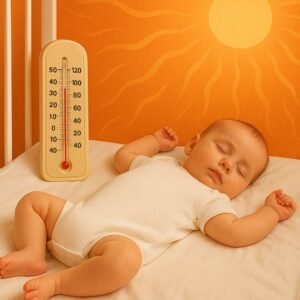
🌞 Summer Baby Sleepwear (75°F+/24°C+)
What to dress baby in:
- 👕 Short-sleeve cotton onesie or just a diaper
- 💤 Sleep sack: 0.5 TOG or none if the room is very warm
🌞 Summer Baby Sleepwear (75°F+/24°C+)
What to dress baby in:
- 👕 Short-sleeve cotton onesie or just a diaper
- 💤 Sleep sack: 0.5 TOG or none if the room is very warm
Top Brand Pick:
Kyte Baby 0.6 TOG Bamboo Sleep Bag – ultra-breathable and moisture-wicking.
🔥 Avoid:
- Fleece
- Multiple layers
- Hats or mittens (suffocation hazard + overheating)
🍂 Mild Weather Sleepwear (68–72°F/20–22°C)
What to dress baby in:
- 👕 Long-sleeve cotton pajamas
- 💤 Sleep sack: 1.0 TOG for a light but cozy layer
Top Brand Pick:
Halo SleepSack – mesh-lined and AAP-compliant.
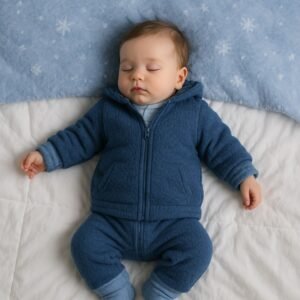
❄️ Winter Sleepwear (Below 61°F/16°C)
What to dress baby in:
- 🧣 Merino wool base layer or cotton onesie
- 👕 Fleece pajamas or footed sleeper
- 💤 Sleep sack: 2.5–3.5 TOG for extra warmth
Top Brand Pick:
Woolino 4-Season Ultimate Sleep Bag – merino wool naturally adapts to temperature shifts.
🚫 Avoid:
- Hats indoors
- Cribs near heaters or drafts
- Over bundling — even in cold rooms
✅ AAP-Approved Safe Sleepwear Guidelines
- No loose blankets, pillows, or toys in the crib
- Always place baby on their back to sleep
- Sleepwear should fit snugly (but not tight) around the chest
- Avoid anything with a hood, which can ride up over the face
- Never use weighted sleepwear — deemed unsafe by AAP (2022 update)
🚫 Common Mistakes to Avoid
❌ Overdressing
47% of parents unintentionally overdress their babies, increasing the risk of overheating.
❌ Using fleece AND a high-TOG sack in mild temps
Layering warm pajamas with a 2.5+ TOG sleep sack in a 70°F room? That’s too much!
❌ Using mittens or hats
These interfere with natural self-soothing and trap heat dangerously.
👶 Popular Sleepwear Types: Pros & Cons
| Type | Pros | Cons |
| Swaddles | Calms newborns | Unsafe once baby rolls |
| Sleep Sacks | Secure & TOG-rated | May limit leg mobility |
| Footed Pajamas | Convenient | Can cause overheating |
| Wearable Blankets | Safe & cozy | Limited sizing for older toddlers |
Parent Favorite:
Love to Dream’s Transition Bag — lets babies self-soothe with arms up while staying snug.
👩👩👦👦 What Real Parents Recommend
🗨️ “In 68°F, we do a long-sleeve onesie and a 1.0 TOG sack. His hands are cold, but the chest is warm — and that’s what matters!” — Reddit Mom
🗨️ “I use the Hatch Grow thermometer to track room temperature. Total game-changer!” — BabyCenter User
🗨️ “Built-in sleeve cuffs are way better than mittens — no lost items, and they let him self-soothe.” — Netmums Tip
🏷️ Top Sleepwear Brands for Babies (Trusted by Parents)
- Kyte Baby: Soft bamboo, TOG-rated (0.5–2.5), eczema-friendly
- Halo: AAP-backed designs, great for transitions
- Woolino: Merino wool that works in all seasons
- Nested Bean: Zen Sack with light chest pressure
- Carter’s: Budget-friendly cotton PJs with zippers
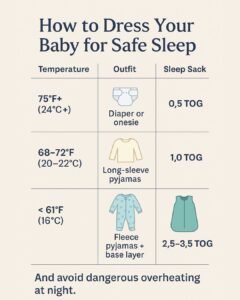
📊 Visual Cheat Sheet: How to Dress Baby by Temperature
| Temperature | Outfit | Sleep Sack |
| 75°F+ (24°C+) | Diaper or onesie | 0.5 TOG |
| 68–72°F (20–22°C) | Long-sleeve pyjamas | 1.0 TOG |
| < 61°F (16°C) | Fleece pyjamas + base layer | 2.5–3.5 TOG |
🚨 How to Know If Baby Is Overheating or Too Cold
Signs of Overheating:
- Sweaty neck or back
- Rapid breathing
- Flushed skin or heat rash
- Baby is lethargic or unusually irritable
What to do: Remove a layer, cool the room, and monitor closely.
Signs of Underheating:
- Cold chest or back
- Pale, blotchy skin
- Fussiness or difficulty sleeping
What to do: Add a layer or switch to a warmer TOG.
👶 Final Thoughts: Keep It Simple, Keep It Safe
Dressing your baby for sleep doesn’t have to be complicated. When in doubt:
- Follow the TOG + room temperature rule
- Focus on breathable fabrics
- Feel the chest, not the hands
- And remember — a cool baby is better than an overheated one
Also, what your baby sleeps in is just part of the picture—learn how the right bassinet sleeper can complete your safe sleep setup.
Safe sleep is the best sleep for you and the baby.