


If you’re reading this at 3 a.m. with a tiny, wide-awake human in your arms, take a breath, mama. You are not failing, and your baby is not broken. Newborn sleep is supposed to be a little chaotic in the beginning, and the good news is that there are gentle, loving things you can do to nudge your little one toward longer, calmer stretches at night, without any “cry it out” that doesn’t sit right with your heart.
This guide walks through how to get a newborn to sleep through the night using a soft, no-cry-leaning approach: full daytime feeds, age-appropriate wake windows, drowsy-but-awake practice, a soothing bedtime routine, a dark room with white noise, the dream feed, and honest expectations on when night sleep actually consolidates. Think of this as gentle scaffolding, not a rigid program. Your baby is allowed to be a baby, and you’re allowed to rest too.
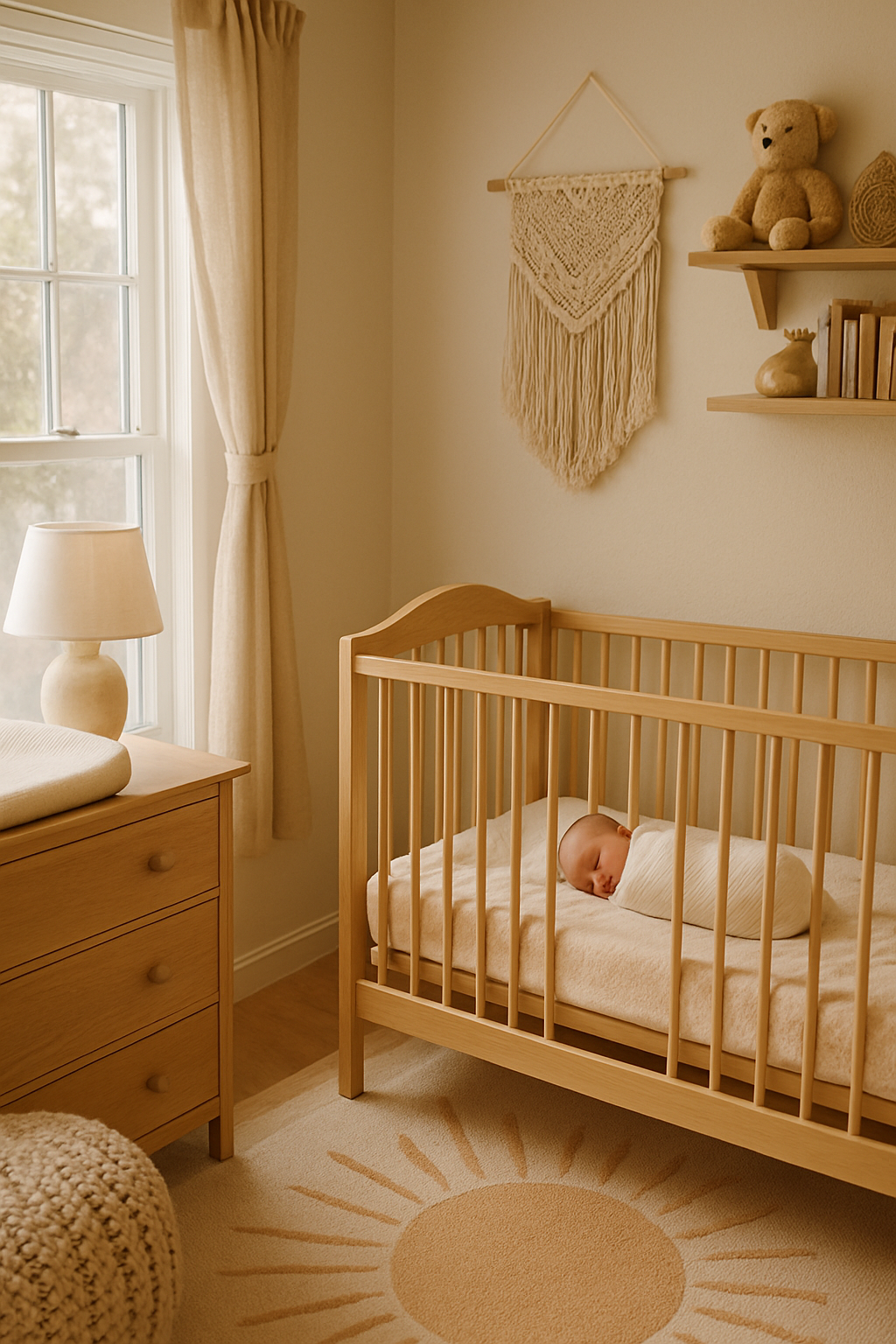
First, what “sleeping through the night” really means
Let’s reset expectations kindly, because half the stress of newborn nights comes from comparing your baby to a milestone they aren’t built for yet. For a newborn, “sleeping through the night” usually means a single longer stretch of around 5 to 6 hours, not the magical 12 hours you see in parenting memes. Brand-new babies have tiny tummies and need to feed often, including overnight, and that is healthy and normal.
Most babies start stringing together longer night stretches somewhere between 3 and 6 months, as their stomachs grow and their circadian rhythm matures. Some get there sooner, some later, and both are completely fine. Everything below is about gently stacking the odds in your favor, not forcing a timeline. Always follow safe sleep guidance too: baby on their back, on a firm flat surface, in their own clear space with no pillows, bumpers, or loose blankets.
Fill the daytime tank: full feeds and bright days
One of the gentlest ways to grow night sleep is to make sure most of your baby’s calories happen during the day. When daytime feeds are full and frequent, babies naturally need a little less overnight as the weeks go on.
- Aim for full feeds, not snacks. Keep your baby awake and actively feeding rather than dozing off after a few sips. A gentle cheek stroke, a diaper change mid-feed, or unswaddling can help them finish.
- Feed often in the day. Roughly every 2 to 3 hours while awake helps front-load nutrition so nights can stretch.
- Let daytime be bright and lively. Open the curtains, talk and sing during feeds, and don’t tiptoe around naps. Daylight and gentle noise help set your baby’s internal clock so they learn day from night.
Watch wake windows (not the clock)
An overtired newborn is so much harder to settle, and overtiredness is one of the biggest hidden causes of fighting sleep and frequent night waking. Newborns can only stay comfortably awake for short windows before they need to rest again.
As a soft guide, many newborns do best with wake windows of about 45 to 90 minutes in the first couple of months, gradually lengthening as they grow. Rather than counting minutes, learn your baby’s sleepy cues and respond early.
- Glazed or staring eyes, looking away
- Yawning, jerky movements, or red eyebrows
- Fussing, rooting, or rubbing their face
Catch that first yawn and start winding down. Putting baby down before they hit the overtired wall makes every other gentle step work better. A predictable rhythm of feed, awake time, then sleep can ease daytime chaos too, and a simple newborn sleep schedule can give you a flexible framework to lean on without watching the clock obsessively.
Practice drowsy but awake (gently)
“Drowsy but awake” is the gentle heart of helping a baby learn to settle. The idea is to lay your baby down when they’re calm and sleepy but not fully asleep, so they get little chances to drift off in their own space. This is a skill that builds slowly over weeks, not a switch you flip overnight.
How to do it without tears
- Feed, then do your calming wind-down so baby is relaxed and heavy-lidded.
- Lay them down soft and drowsy. If they fuss, that’s your cue to step back in.
- Offer graduated support: shush, a hand on the chest, gentle rocking, or pick them up to calm and try again.
If it’s just not happening one night, feed or rock your baby all the way to sleep and try again tomorrow. No guilt. Newborns thrive on responsive, loving care, and contact naps and cuddles to sleep will not “ruin” anything in these early weeks.

A short, soothing bedtime routine
Babies feel safe with predictability. A simple, repeatable routine becomes a cue that says, “Sleep is coming,” long before they understand words. Keep it short, around 20 to 30 minutes, and calm.
- A warm bath or a gentle wipe-down (a few nights a week is plenty)
- Fresh diaper and pajamas, then a swaddle or sleep sack
- A full feed in dim light
- A quiet song, a few soft words, or gentle rocking
- Into bed, drowsy but awake, with white noise on
Do roughly the same order every night. Soft, repetitive sound can be part of that signal too. Many families lean on gentle baby sleep music or lullabies as part of the wind-down to mark the shift from busy day to quiet night.
Set the stage: dark room and white noise
Your baby’s environment does a surprising amount of the heavy lifting, and these two changes are some of the gentlest, most effective tweaks you can make.
- Make the room dark. A dark sleep space at night supports melatonin and tells your baby’s body it’s time for deep rest. Blackout curtains help, especially for early bedtimes in summer. Keep daytime naps a touch lighter so day and night stay distinct.
- Add continuous white noise. Steady, womb-like sound soothes newborns and softens household clatter so a closing door doesn’t startle them awake. Keep it at a gentle volume and placed a safe distance from the crib.
Try a dream feed
A dream feed can gently extend that first long stretch so you get a bigger block of sleep before the night really begins. You feed your baby while they’re still drowsy, usually around 10 or 11 p.m., right before you go to bed yourself, without fully waking them.
- Lift your baby gently, offer breast or bottle, and let them feed in a sleepy state.
- Keep lights low and skip the playful talk so they stay in night mode.
- A quick diaper change only if truly needed, then back to bed.
Dream feeds work beautifully for some babies and not others. If yours wakes fully and won’t resettle, it’s okay to drop it. It’s a tool, not a rule.
Keep going as your baby grows
These gentle habits carry beautifully into the months ahead. When you’re ready for the next stage, our deeper guide on how to get a baby to sleep through the night gently walks you through older-baby routines, and you can pair it with a flexible newborn sleep schedule and calming baby sleep music for an easier wind-down.

Honest expectations: when night sleep consolidates
Here’s the truth, said with love: there is no single night when everything clicks. Night sleep consolidates gradually as your baby’s brain and tummy mature. Many babies manage one long stretch by around 3 to 4 months, and longer, more reliable nights often arrive between 4 and 6 months and beyond.
Expect bumps along the way: growth spurts, teething, leaps, travel, and the famous sleep regressions can scramble even a great sleeper for a week or two. These are temporary. Keep your gentle routine steady, lower the bar for yourself, and lean on your village. You’re doing tender, important work, and progress with newborns is almost never a straight line.
Frequently asked questions
Is it okay to feed my newborn to sleep?
Yes, completely. Feeding to sleep is normal and biologically natural for newborns, and it will not create a “bad habit” in these early weeks. If you’d like more independent settling later, you can gradually practice drowsy-but-awake when both of you feel ready. For now, follow your baby’s needs and trust your instincts.
When will my newborn sleep through the night?
Most newborns start with a single long stretch of about 5 to 6 hours, often by 3 months, and more consolidated nights tend to develop between 4 and 6 months. Every baby is on their own timeline, so use these as gentle averages rather than deadlines.
Should I wake my baby to feed at night?
In the early weeks, very young or smaller babies sometimes need to be woken for feeds, so always follow your pediatrician’s guidance on this. Once your baby is gaining weight well and given the all-clear, you can let them wake on their own at night and simply enjoy the longer stretches as they come.
How do I keep daytime naps from hurting night sleep?
Protect daytime sleep rather than cutting it, since overtiredness usually worsens nights. Keep naps in a slightly lighter room, watch wake windows, and make the difference between day and night clear: bright and lively by day, dark and quiet by night. A flexible daily rhythm helps both naps and nighttime fall into place.