
There are few sounds that make a parent sit bolt upright faster than a baby crying in sleep. One moment your little one is peacefully snoozing, and the next they’re whimpering, fussing, or letting out a full cry without ever opening their eyes. If your heart is racing as you read this at 2 a.m., take a breath: in most cases, this kind of crying is a completely normal part of how babies sleep, and it doesn’t mean something is wrong.
Babies have very different sleep architecture than adults. They spend far more time in light, active sleep, and they’re still learning how to move smoothly from one sleep stage to the next. That learning process can be noisy. Below, we’ll walk through the most common reasons babies cry in their sleep, how to tell normal fussing from a real problem, and gentle, practical ways to respond, plus the warning signs that mean you should call your pediatrician.

Why is my baby crying in sleep? The most common causes
Crying during sleep usually falls into one of a handful of categories. Often it’s a mix of a few. Here’s what’s typically behind it.
Active (REM) sleep and dreaming
Newborns and young infants spend roughly half their sleep in active sleep, the equivalent of REM. During this stage, you’ll see fluttering eyelids, twitching, irregular breathing, grunting, and yes, little cries and whimpers. Their brains are busy and their bodies are anything but still. Whether babies “dream” the way we do is debated, but this active stage clearly produces a lot of sound and movement. The key thing: your baby is still asleep, and the noise often passes on its own within a minute or two.
Sleep-cycle transitions
Babies cycle between light and deep sleep roughly every 40 to 60 minutes. At the end of each cycle, there’s a brief partial waking. An adult rolls over and drifts off again without noticing. A baby who hasn’t fully mastered this skill may cry out as they bump up against the surface of sleep before sinking back down. This is one of the single most common reasons for crying that starts and stops without a true wake-up.
Gas, digestion, and tummy discomfort
A trapped gas bubble or the work of digesting a feed can cause a baby to grunt, squirm, pull up their legs, and cry while still asleep. Newborn digestive systems are immature, so this is especially common in the early months and often settles as the gut matures.
Hunger
Young babies have tiny stomachs and feed frequently, including overnight. Pre-cry hunger signals, like rooting, lip-smacking, and fussing, can happen during light sleep. If it’s been a while since the last feed, hunger may be the simple answer.
Teething
Sore, swollen gums often feel worse at night when there’s nothing to distract from the ache. Teething can begin around 4 to 7 months and can cause more drooling, gum-rubbing, and fussy, broken sleep. If your baby is also running a high fever, that’s not teething, and it’s worth a call to the doctor.
Being too hot, too cold, or uncomfortable
An overly warm room, a wet diaper, or clothing that’s bunched up can all trigger sleep crying. Babies sleep best in a comfortably cool room, dressed in light layers.
Nightmares vs. night terrors: an age guide
Parents often ask whether their baby is having bad dreams. It helps to separate two very different things, and to know that true versions of each are uncommon in the first year.
- Nightmares are scary dreams that wake a child up, usually in the second half of the night. A child who has one is awake, frightened, and comforted by your presence. Nightmares typically become more common in the toddler and preschool years, not in early infancy.
- Night terrors happen during deep, non-REM sleep, usually in the first few hours after bedtime. The child may scream, thrash, or look terrified but is not actually awake and won’t recognize you. They settle back to sleep and remember nothing in the morning. Night terrors are more typical from the toddler years onward and are rare in babies.
For most young infants, what looks like a “bad dream” is far more likely to be active sleep or a sleep-cycle transition. With night terrors, the gentlest approach is usually to keep your child safe and let the episode pass rather than trying to fully wake them.
Want fewer middle-of-the-night cries?
A lot of sleep crying eases once a baby’s days and nights are more predictable. Our guides on why babies cry in their sleep and a practical newborn sleep schedule can help you spot patterns and gently support better rest, for both of you.

What’s normal vs. when to call the pediatrician
The reassuring news is that brief crying, whimpering, grunting, and fussing during sleep that resolves on its own is overwhelmingly normal, especially in the first several months. Normal sleep crying tends to be short, to come and go, and to happen without other symptoms.
Call your pediatrician, or seek urgent care, if your baby’s crying comes with any of these warning signs:
- A fever (in babies under 3 months, a temperature of 100.4°F / 38°C or higher is always an emergency call)
- Any trouble breathing, fast or labored breathing, grunting with each breath, flaring nostrils, or a bluish color
- Crying that is inconsolable or sounds high-pitched, weak, or unusual, and won’t settle no matter what you do
- Not feeding well, refusing feeds, far fewer wet diapers, or signs of dehydration
- Being unusually limp, floppy, or hard to wake, or extreme irritability
- Vomiting (especially forceful or green), a rash that doesn’t fade when pressed, or a swollen, bulging soft spot
You know your baby best. If something simply feels off, trust that instinct and reach out to a medical professional. It’s always okay to call.

Gentle ways to respond to sleep crying
Because so much sleep crying is a baby surfacing between sleep cycles, the most helpful first move is often to do less, not more.
- Pause before you intervene. Wait a minute or two and listen. If the crying is part of active sleep or a transition, it often fades and your baby drifts back down, no scooping required.
- Watch for fully awake cues. If the crying escalates, becomes rhythmic and insistent, or your baby’s eyes open and stay open, that’s a real wake-up to respond to.
- Run through the basics. Check for a dirty diaper, signs of hunger, or a room that’s too warm or too cool. Feed if it’s been a while.
- Soothe calmly and quietly. Keep lights low and your voice soft. Gentle patting, a hand on the chest, shushing, or offering a feed can help. Calm, low-key responses keep night wakings from turning into full playtime.
- Help with gas or teething. For gassiness, a gentle burp or a little tummy massage can offer relief. For teething discomfort, ask your pediatrician about safe options, and skip amber necklaces and unproven remedies.
Don’t forget safe sleep
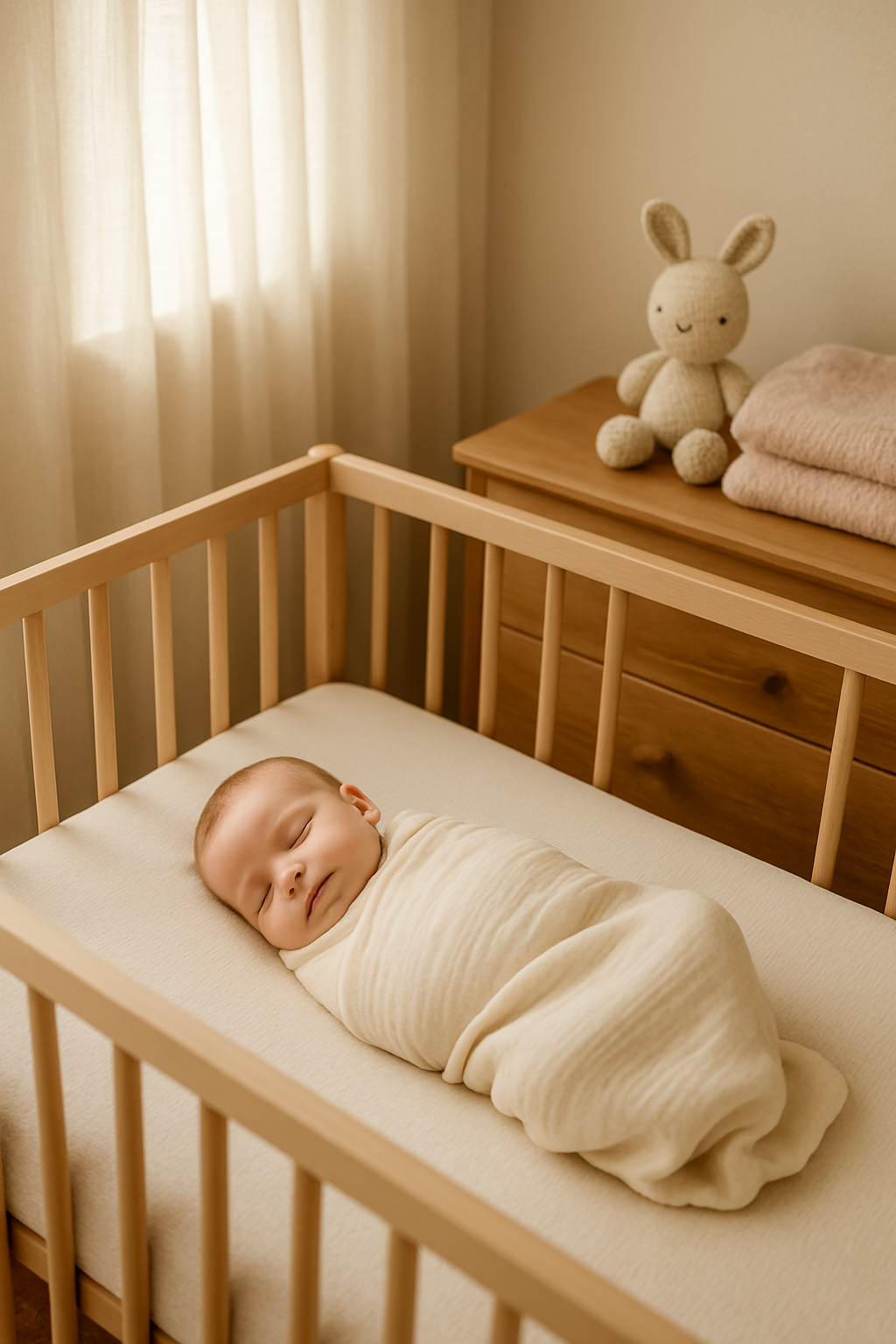
However you respond, keep safe-sleep practices in place every single time. Always place your baby on their back to sleep, on a firm, flat surface with a fitted sheet and nothing else, no pillows, loose blankets, bumpers, or soft toys. Room-sharing without bed-sharing is recommended, and keep the room a comfortable temperature so your baby doesn’t overheat. These steps dramatically lower the risk of SIDS and should never be skipped, even on the most exhausting nights.
Frequently asked questions
Should I wake my baby when they cry in their sleep?
Usually no. If your baby is crying but clearly still asleep, waking them can interrupt a normal sleep cycle and make things harder. Pause, listen, and give them a chance to settle. Only step in fully if the crying escalates into a true wake-up or you spot any warning signs like fever or breathing trouble.
Do newborns have nightmares?
True nightmares are very unlikely in newborns. What looks like a bad dream is almost always active (REM) sleep, with its twitches, grunts, and little cries, or a brief partial waking between sleep cycles. Nightmares and night terrors become more common in the toddler and preschool years.
Why does my baby cry in their sleep but won’t wake up?
This is a classic sign of active sleep or a sleep-cycle transition. Your baby’s brain and body are active even though they’re not conscious, so they cry, fuss, or move without truly waking. As long as there are no other symptoms, it’s a normal and usually short-lived part of infant sleep.
When does sleep crying get better?
For many families, it eases as babies mature and learn to link sleep cycles, often noticeably by 3 to 6 months. Consistent, predictable days and a soothing bedtime routine help. If crying is frequent, intense, or paired with other symptoms, talk with your pediatrician.